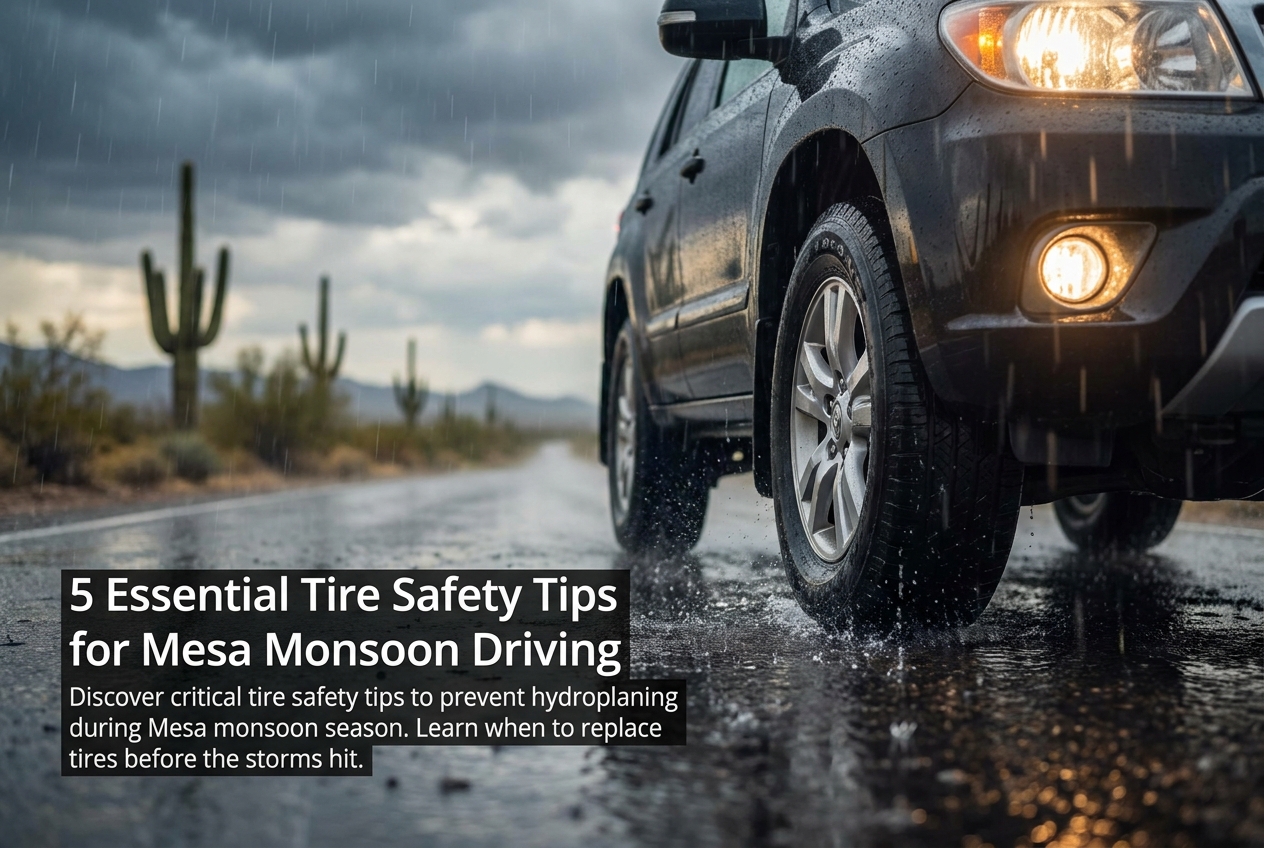
The Hidden Dangers of Mesa Monsoon Driving
The sudden shift from blistering dry heat to torrential downpours makes Mesa monsoon season one of the most hazardous times to drive in Arizona. After months without rain, engine oil, grease, and debris accumulate on the asphalt. When that first heavy storm hits, local roads instantly become as slick as black ice. Your vehicle's tires are the only point of contact between you and these treacherous driving conditions, making their condition absolutely critical to your safety.
Many drivers mistakenly believe that because it rarely rains in the desert, tread depth isn't a major priority. In reality, the intense Arizona sun bakes your rubber compounds all summer, leading to dry rot and accelerated wear. When a sudden microburst floods the streets, compromised rubber cannot properly channel standing water away from the contact patch. Instead of desperately searching for a tire shop near me when you are already caught in a dangerous storm, taking proactive steps today can keep your family safe.
Understanding exactly how your vehicle interacts with wet roads is the first step in defensive driving. A well-maintained set of tires acts like a heavy-duty squeegee, forcing gallons of water out from underneath the vehicle every second. When this system fails, you lose steering, braking, and control entirely.
5 Essential Tire Safety Checks Before the Rain Hits
Don't wait for a flooded intersection to find out your vehicle isn't prepared for severe weather. Perform these essential checks before the dark clouds roll into the valley:
- Check your tread depth: Place a penny head-first into your tread grooves. If you can see the top of Lincoln's head, your tread is dangerously low and cannot safely disperse monsoon rainwater.
- Inspect for dry rot and cracking: The intense Mesa sun degrades rubber fast. Look closely at the sidewalls for tiny spiderweb cracks that indicate the rubber is brittle and prone to blowout at highway speeds.
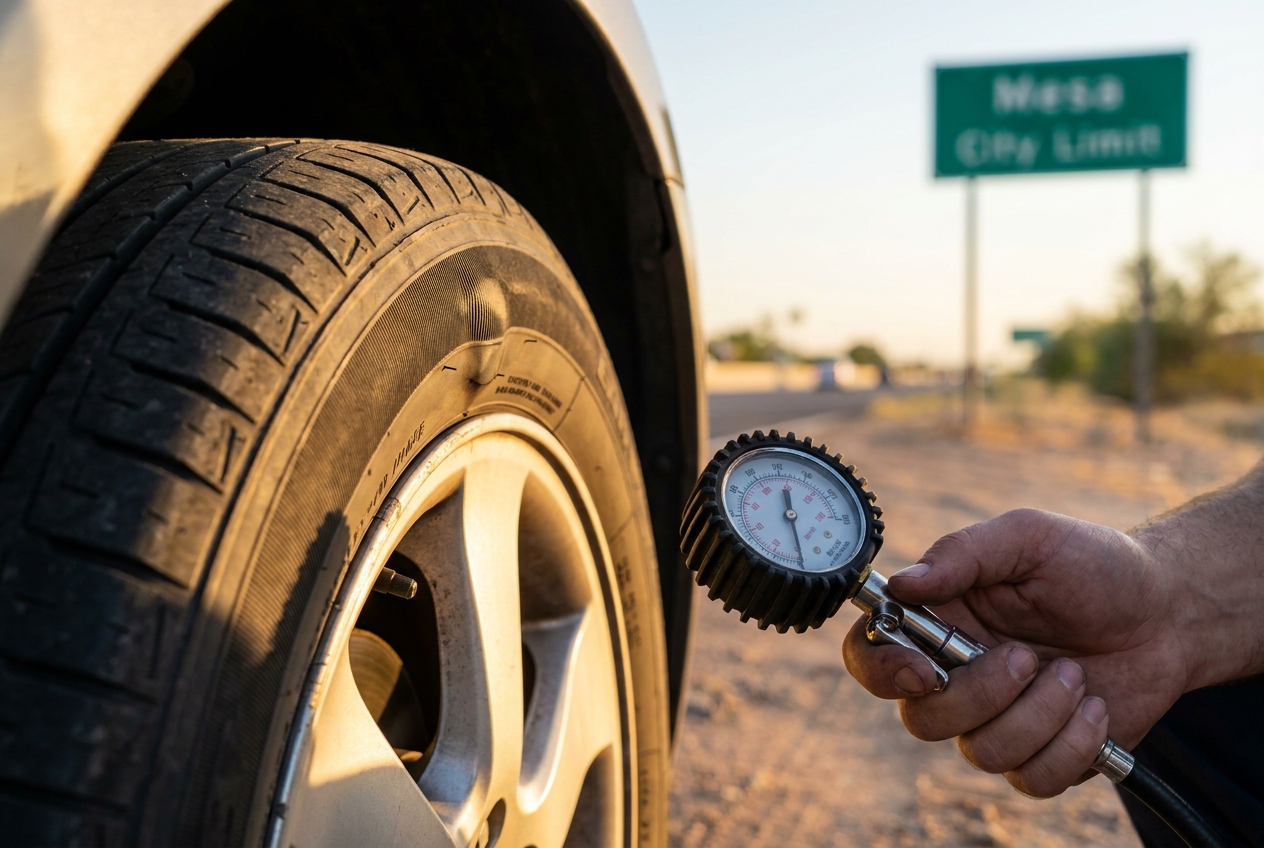
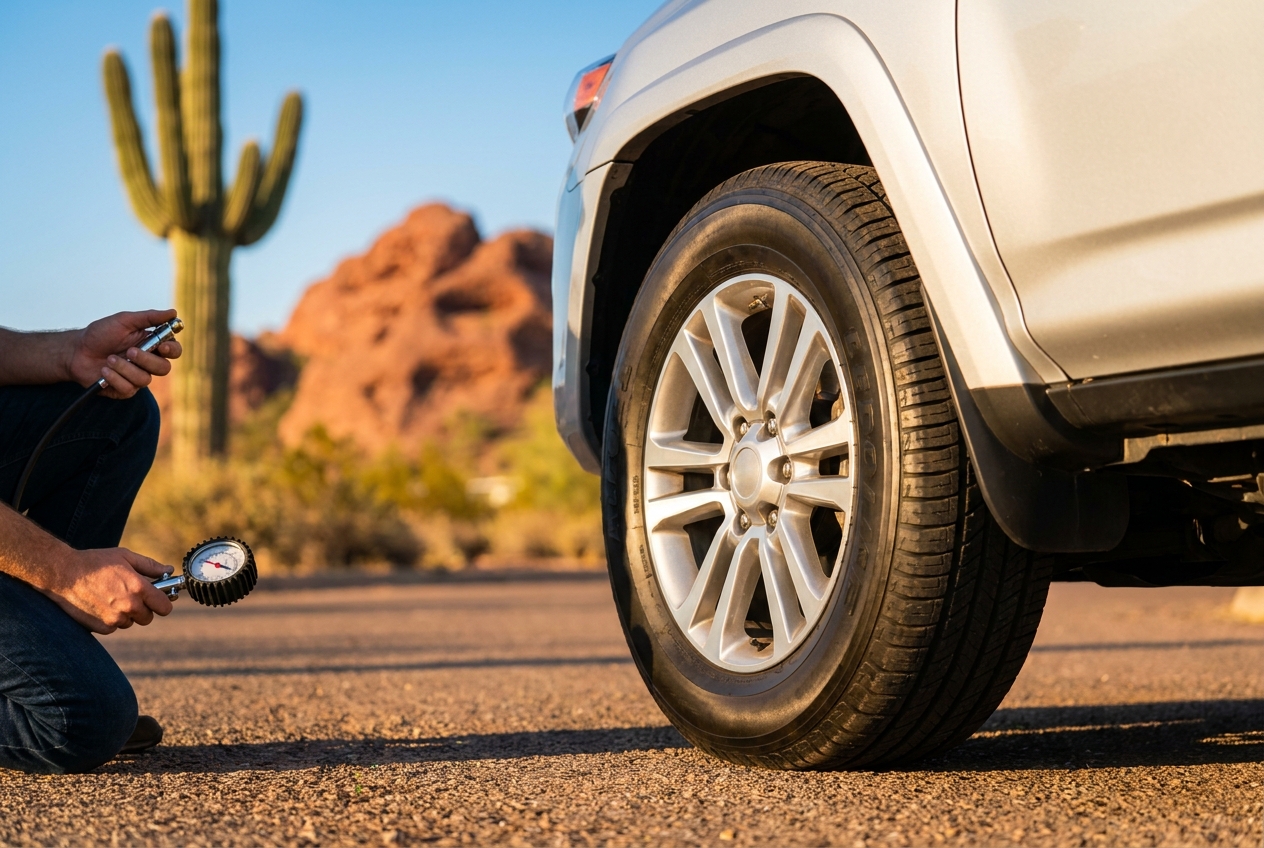
- Verify proper air pressure: Extreme temperature swings cause tire pressure to fluctuate wildly. Underinflated rubber collapses in the center, severely reducing wet traction and increasing the risk of hydroplaning.
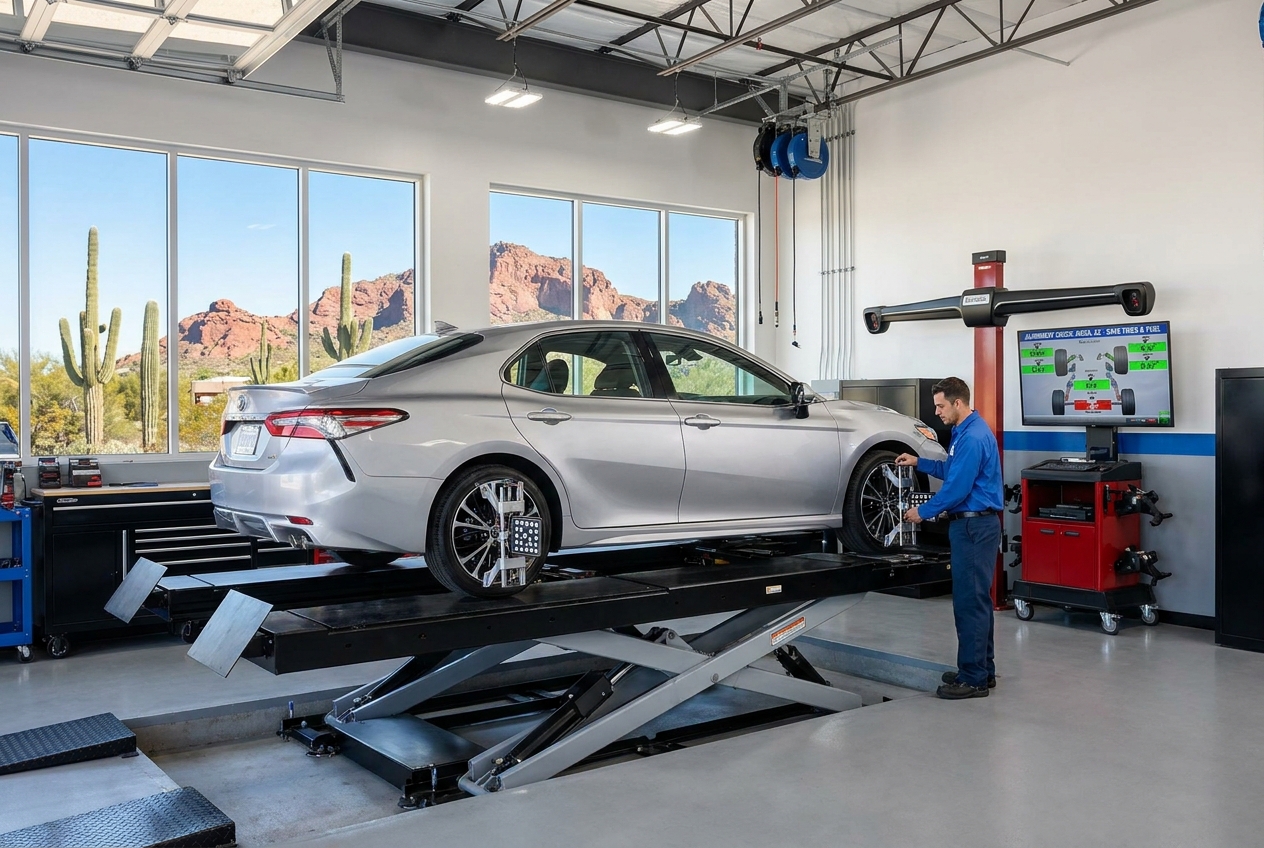
- Look for uneven wear patterns: If the inside or outside edges are wearing faster than the center, your suspension is out of specification. Scheduling a professional tire alignment near me ensures your vehicle tracks straight and maximizes your contact with the road.
- Address slow leaks immediately: If you find yourself constantly adding air, you likely have a hidden puncture. Searching for professional tire repair near me before a storm hits ensures a minor fix doesn't turn into a catastrophic failure on a flooded highway.
How to Prevent Hydroplaning on Wet Arizona Roads
Hydroplaning occurs when your vehicle completely loses contact with the road, essentially water-skiing on top of a thin layer of standing water. This terrifying experience is completely preventable with the right driving habits and properly maintained equipment.
- Reduce your speed significantly: The faster you drive through standing water, the harder it is for your tread grooves to evacuate it. Drop your speed by at least 10-15 mph during heavy downpours.
- Turn off cruise control: If you hydroplane while cruise control is engaged, your vehicle may actually accelerate when it senses a loss of traction, making the situation much worse.
- Avoid the outer lanes: Water naturally pools in the outside lanes of highways and city streets. Stay in the center lanes where water is more likely to drain away efficiently.
- Follow the tracks of the vehicle ahead: The tires of the car in front of you have already displaced a significant amount of water. Driving in their tracks gives you a temporary patch of drier asphalt to grip.
If you do feel the steering wheel go unnaturally light, do not slam on the brakes or jerk the steering wheel. Ease your foot off the accelerator and keep the wheel pointed in the direction you want to go until you feel the vehicle regain traction.
Why Proactive Tire Maintenance Saves You Money
It is easy to put off automotive maintenance until something officially breaks, but ignoring your rubber inevitably costs you more in the long run. Driving on excessively worn or improperly inflated rubber forces your engine to work harder to maintain momentum, decreasing your fuel economy by up to 15 percent over a year of driving. Furthermore, compromised handling leads to uneven wear on expensive suspension components like shocks, struts, and wheel bearings.
When comparing different tires for sale, it is important to look beyond just the sticker price. Premium rubber offers superior wet traction ratings, shorter stopping distances, and longer tread life warranties. Don't wait until you have a blowout to pay premium emergency prices; planning ahead allows you to take advantage of seasonal tire deals to secure high-quality replacements at a much lower overall cost.
Even if you are on a tight budget and are considering used tires near me, you must verify that they have sufficient tread depth and zero signs of sidewall cracking. A reputable local tire shop will never sell you unsafe, compromised rubber just to make a quick buck. They will inspect the structural integrity and ensure the manufacture date is well within safe limits.
Navigating Seasonal Tire Choices for Desert Driving
Choosing the right compound for your vehicle is heavily dependent on where you do the majority of your driving. While some local drivers occasionally ask us about the best winter tires for weekend trips up to Flagstaff or the White Mountains, the vast majority of Mesa drivers are best served by high-quality summer or all-season tires.
Modern all-season tires are engineered with specialized silica compounds and complex asymmetrical tread patterns specifically designed to tackle both scorching dry pavement and sudden monsoon deluges. These compounds resist the baking effects of the desert sun while maintaining the flexibility needed to grip slick, oily roads during a storm.
When you visit a dedicated, community-focused tire shop, you get personalized recommendations based on your exact vehicle, your daily commute, and our unique Arizona climate, ensuring you never pay for features you don't actually need.
Stay Safe on Mesa Roads This Monsoon Season
Your safety during extreme weather ultimately comes down to the condition of the rubber meeting the road. Don't let a sudden downpour catch you off guard with bald, unsafe rubber.
Need expert advice on your vehicle's readiness? The ASE-certified technicians at 480 Tires are here to help. Stop by our Mesa location today for a comprehensive inspection, honest advice, and the peace of mind you deserve before the next storm hits.